

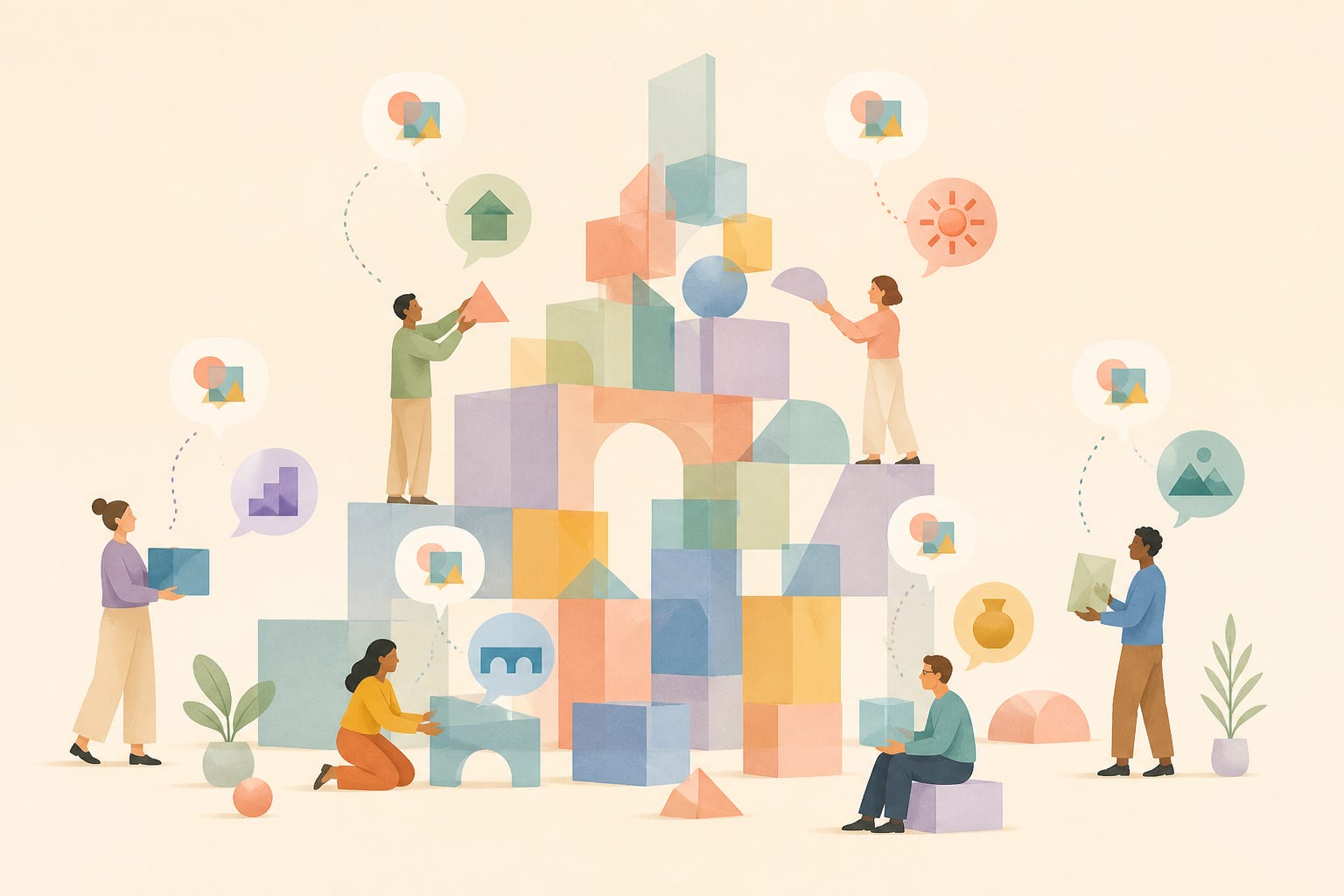
We Still Speak the Same Language. So Why Do We Understand Each Other Less?
The story of the Tower of Babel has always struck me as one of the most intriguing stories in the Bible. According to Genesis, humanity had managed to work together with extraordinary ambition. United by one language, people set out to build a tower that would reach the heavens. The project failed, not because the builders suddenly became less intelligent or less motivated, but because they could no longer understand one another. Their common language disappeared, cooperation broke down and the tower was abandoned.
I am beginning to wonder whether the opposite has become true.
Perhaps our modern Babel exists precisely because we still speak the same language.
The Comfort of Shared Words
Listen to almost any public debate today and you will hear the same vocabulary repeated over and over again. Equality. Inclusion. Sustainability. Diversity. Innovation. Quality. Safety. Responsibility. Justice. These words dominate political speeches, academic conferences, corporate strategies and media discussions. They are so familiar that they have almost become unquestionable. Who, after all, would argue against quality or responsibility?
Yet I increasingly suspect that these words often create an illusion rather than genuine understanding.
Take a word like equality. It sounds wonderfully precise until you ask people what they actually mean by it. One person speaks about equality before the law. Another about equality of opportunity. A third believes equal opportunity is meaningless unless unequal starting positions are corrected. Someone else argues that society should ultimately judge itself by equal outcomes. All of them sincerely believe they are defending equality. All of them use exactly the same word. Yet they are describing fundamentally different ideas.
The same happens with inclusion.
Ask a psychologist, and inclusion may mean giving every child the support needed to learn successfully. Ask a lawyer, and it becomes a question of rights and equal treatment. Ask a school principal, and inclusion immediately raises practical questions about budgets, staffing and classroom organisation. Parents often think first about their own child. Teachers think about twenty-five children sitting in the same classroom at the same time.
None of these interpretations is unreasonable.
None is identical.
Agreement Before the Argument
We tend to think disagreement begins when people start arguing. By then, however, the real disagreement may already have existed for weeks, months or even years. It begins much more quietly, at the moment everyone around the table nods in apparent agreement while silently attaching a different meaning to the same abstract word. The psychologist leaves the meeting convinced that “inclusion” means one thing, the lawyer another, the teacher a third and the policymaker a fourth. Nobody has tried to mislead anyone. Nobody has even realised that four different conversations have just taken place under the comforting illusion of one shared language.
The disagreement only becomes visible later, when the policy reaches reality and each participant starts implementing what they sincerely believed everyone had agreed upon.
The Price of Knowing More
Modern society has become astonishingly specialised. That is one of the great reasons for its success. We know more about medicine, engineering, economics, psychology and computing than any civilisation before us. Every specialist sees something that others might miss.
But specialisation comes with an unavoidable consequence.
Every expert learns to view reality through a particular lens. The psychologist notices things the engineer may never consider. The lawyer sees implications invisible to the economist. The engineer recognises constraints that escape the sociologist. This is not a flaw in expertise; it is the very reason expertise exists.
The difficulty begins when these different perspectives have to work together.
To communicate across disciplines, we increasingly rely on highly abstract concepts. Those concepts are broad enough for everyone to recognise and accept, but precisely because they are so broad, they quietly accommodate different meanings. The abstraction becomes a meeting place where everyone believes they have arrived at the same destination, while in reality each person has travelled there along a different road.
Our Modern Babel
That is why modern Babel is so difficult to recognise.
The people building the biblical tower knew immediately that communication had broken down because nobody understood the words being spoken.
Our situation is almost the reverse.
We understand the words perfectly.
It is the realities behind those words that have quietly drifted apart.
That may explain why so many meetings end with apparent consensus and so many projects begin with genuine optimism, only to become increasingly frustrating during implementation. The participants are often intelligent, well informed and acting in good faith. Yet each is trying to build a different tower while believing everyone else is building the same one.
What If We Fixed the Language?
For several days I was convinced that this was the heart of the problem.
Then another question began to bother me.
Suppose we solved it.
Suppose every psychologist, teacher, lawyer, policymaker and politician suddenly agreed on exactly what inclusionmeant. Suppose they all shared precisely the same definition of equality, quality and responsibility.
Would our institutions suddenly start working smoothly?
The longer I thought about that question, the less certain I became.
Because even perfect agreement about our words might still leave us confronting something far more complicated.
Reality itself.